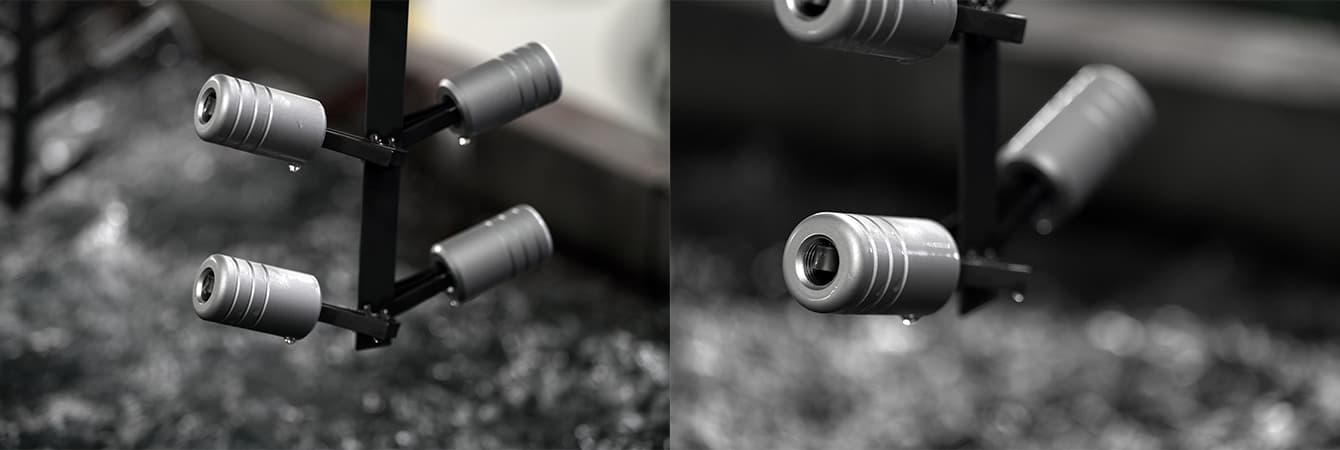
Aluminum Anodizing (Type II Sulfuric Acid Anodizing)
 Core Manufacturing Technologies & Services
LEEDO Technology provides complete aluminum anodizing services, ranging from standard corrosion protection to customized color finishing. By integrating precision aluminum surface engineering, we meet the dual demands of industrial production and product design.
Main Categories & Technical Specifications
We provide various anodizing processes according to application and specification requirements. The oxide film thickness can be precisely controlled within 5–25μm to ensure that the protective layer depth meets design requirements.
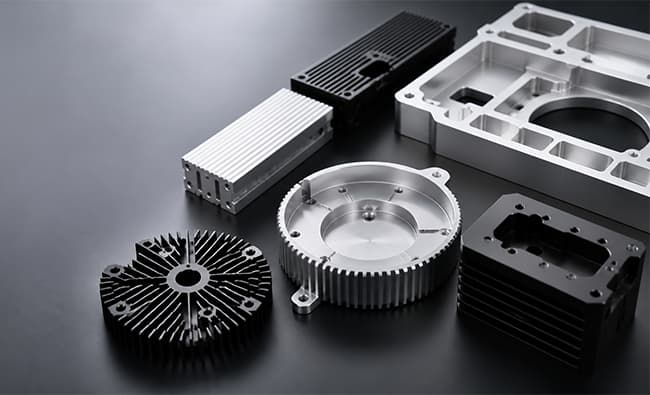
Material Compatibility
Applicable to mainstream aluminum alloys, including extruded aluminum and CNC precision-machined parts, with stable and consistent anodizing quality.

Surface Finish & Appearance Options
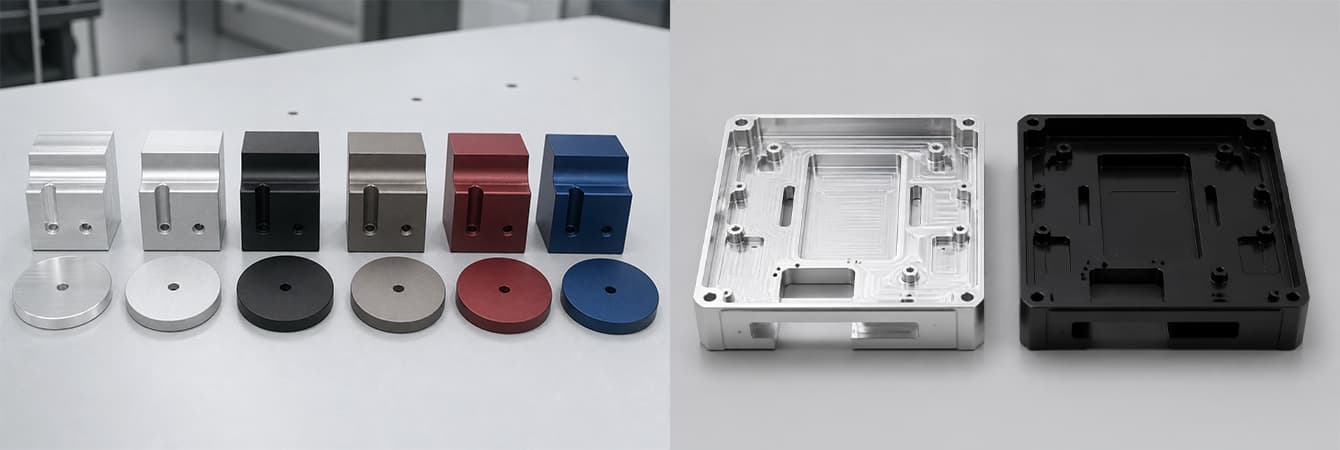
We support multiple color systems and surface textures, from subtle matte finishes and fine sandblasted textures to deep black finishes. Custom dyeing can also be provided according to brand or design requirements, creating metal surfaces that combine functional protection with visual appeal.
-
Clear AnodizingPreserves the natural metallic luster of aluminum and provides a transparent protective layer, suitable for designs that emphasize the original material appearance.
-
Black AnodizingA deep black appearance with a uniform protective layer, widely used in technology-oriented product designs.
-
Silver AnodizingCreates a bright silver metallic texture, commonly used for consumer electronics and precision instrument housings.
-
Custom Color AnodizingOffers multiple color dyeing options that can accurately match brand color standards and meet customized appearance requirements.
-
Matte FinishA low-reflection matte texture that effectively reduces the visual impact of fingerprints and scratches, suitable for handheld devices and equipment panels.
-
Fine Sandblasted TextureSandblasting followed by anodizing creates a uniform fine texture, enhancing both touch and appearance depth.
-
Coating Thickness 5–25μmThe oxide layer depth can be precisely controlled according to application needs, balancing protection performance and dimensional tolerance requirements.
Design & Manufacturing Considerations
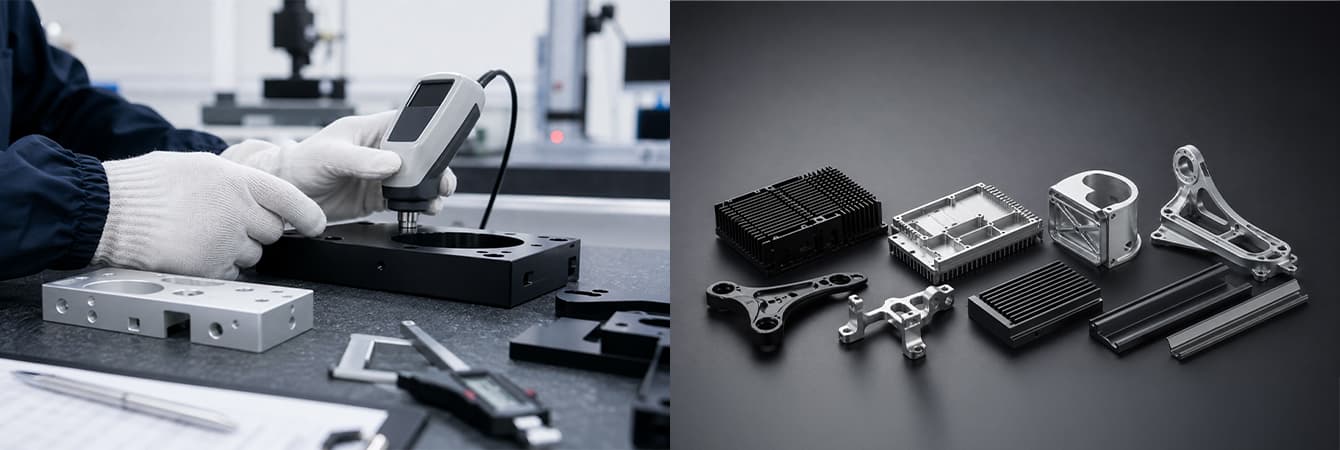
During the early stage of process planning, LEEDO Technology can help evaluate product structure, coating thickness tolerance, color uniformity, and outdoor durability requirements to ensure the anodizing result meets expected quality from the source.
-
Anodizing Thickness AllowanceStandard anodized films grow both inward and outward from the aluminum surface. Actual dimensional changes vary depending on material, film thickness, and process conditions, so dimensional compensation should be reserved during the design stage.
-
Color Consistency EvaluationDeep holes, narrow grooves, and complex curved surfaces may affect dyeing uniformity. Sample validation is recommended during product development.
-
Surface Texture UniformityFor batch production, sandblasting, brushing, and pretreatment conditions should be strictly controlled to ensure consistent surface texture and appearance across all parts.
-
Deep Hole & Sharp Edge Coverage AssessmentDeep holes, blind holes, internal corners, and shielded areas may affect coating thickness uniformity due to current distribution differences. Design for manufacturability (DFM) evaluation is recommended during the design stage.
-
Electrical Contact Area ConsiderationsThe anodized layer is electrically insulating. If the product requires conductivity, grounding, or EMI performance, masking areas or post-processing methods should be planned in advance during the design stage.
-
Outdoor Durability RequirementsFor outdoor or highly corrosive environments, UV exposure, humidity, heat, salt spray, and chemical media should be considered, with appropriate film thickness and sealing specifications selected according to application needs.
Industrial Applications
We widely serve precision industries and consumer product sectors, providing reliable surface treatment solutions for high-specification manufacturing needs.