
Hard Anodizing (Type III Hard Anodizing)
 Core Manufacturing Technologies & Services
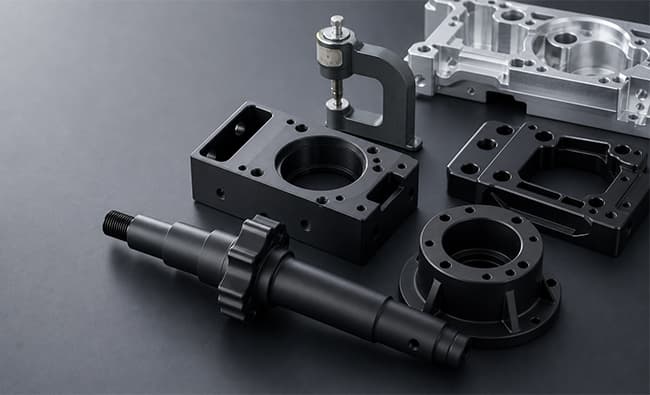
LEEDO Technology provides industrial-grade hard anodizing services. Through a low-temperature, high-current-density process, a high-hardness and highly wear-resistant Type III oxide layer is formed on the aluminum alloy surface, making it suitable for high-wear, high-load, and harsh industrial environments.
Main Categories & Technical Specifications
We provide various hard anodizing processes. The oxide film thickness can be specified from 25–80μm according to application requirements, greatly improving surface hardness, wear resistance, and corrosion resistance for high-load, high-wear, and harsh industrial environments.
Material Compatibility
Suitable for high-strength aluminum alloys. Combined with precision machining and hard anodizing processes, the oxide layer is tightly bonded with uniform thickness.

Surface Finish & Appearance Options
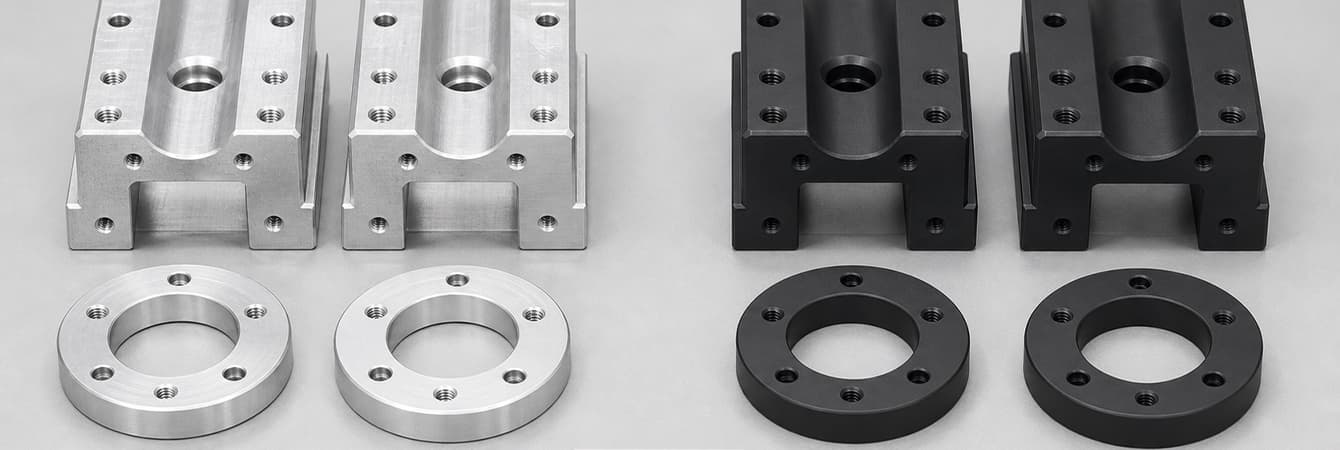
Hard anodizing prioritizes functional performance and offers black, dark gray, and natural color options. PTFE composite treatment can also be integrated to further reduce friction, making it suitable for applications with strict surface durability requirements.
-
Black Hard AnodizingA dark appearance with high-hardness protection, commonly used in defense, aerospace, and high-end industrial equipment while balancing function and texture.
-
Dark Gray Hard AnodizingA low-profile industrial appearance between natural and black, suitable for equipment housings with appearance requirements.
-
Natural Hard AnodizingMaintains the original aluminum alloy color, suitable for functional wear-resistant areas without special appearance requirements.
-
PTFE Hard AnodizingA composite surface engineering process that provides wear resistance and self-lubricating properties, suitable for mechanisms where lubricants cannot be regularly replenished.
-
Coating Thickness 25–80μmApproximately 3–4 times thicker than standard anodizing, providing stronger physical protection with thickness ranges specified according to application needs.
Design & Manufacturing Considerations
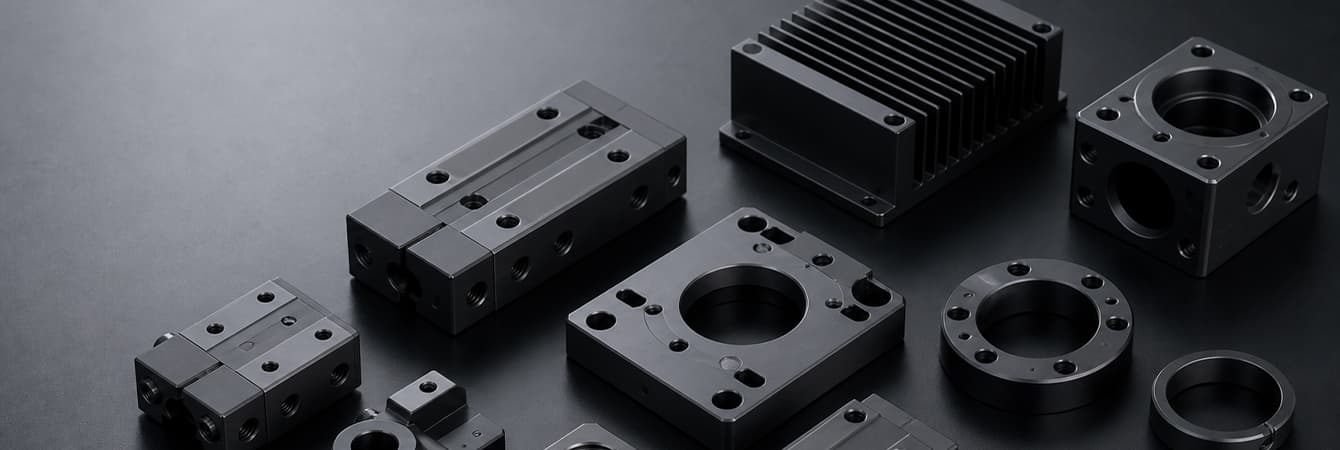
Hard anodizing film thickness has a significant impact on part dimensions. The following factors should be evaluated during the design stage to ensure the final product meets fit tolerance and durability requirements.
-
Wear Resistance RequirementsRecommended film thickness and treatment type are selected according to contact frequency, load conditions, and operating environment.
-
Surface Hardness OptimizationPart geometry and hardness requirements are confirmed to plan optimal process parameters and current density settings.
-
Friction & Sliding Surface DesignKey sliding surfaces are identified to evaluate whether PTFE composite treatment is required to reduce wear rate.
-
Dimensional Compensation PlanningThe hard anodized film grows both inward and outward from the base material. Actual dimensional changes vary depending on material, film thickness, and process conditions, so proper dimensional compensation and sample validation should be included in the design drawing.
-
Long-Term Durability DesignFilm thickness is planned according to target service life to ensure stable protection after long-term use.
-
Repetitive Contact Wear AssessmentFor mechanisms involving repeated opening, closing, or fastening, accumulated surface wear risk should be evaluated and considered early in the design.
Industrial Applications
Designed for high-load, high-precision, and harsh industrial environments, hard anodizing is widely used in aerospace, semiconductor, automation, robotics, and high-performance aluminum alloy components.


