Electroless Nickel Plating (ENP)
 Core Manufacturing Technologies & Services
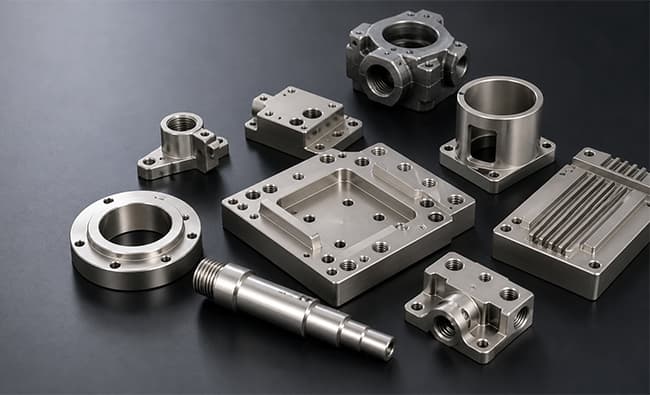
Leedo Technology provides Electroless Nickel Plating (ENP) services, depositing a uniform nickel-phosphorus alloy layer on metal surfaces through an autocatalytic process without the use of an electric field. The coating offers corrosion resistance, high hardness, uniform thickness, and EMI shielding, making it widely used for AI servers, semiconductor equipment, and aerospace precision components.
Electroless Nickel Plating Technology
No electric field is required. A uniform nickel layer is deposited regardless of part geometry, providing complete coverage of complex internal cavities and blind holes.
Precision Uniform Coating
Coating thickness uniformity is superior to electroplating, with tolerances controllable within ±1–2μm, making it suitable for dimension-sensitive components.
Corrosion-Resistant Surface Protection
High-phosphorus formulations provide excellent salt spray and acid/alkali resistance for harsh corrosive environments.
EMI Shielding Solution
The conductive nickel layer effectively shields electromagnetic interference, making it suitable for communication equipment and precision electronic components.
High-Precision Metal Surface Engineering
Combined with post-plating heat treatment, surface hardness can be increased to Vickers 900+ HV, approaching the hardness of hard chrome plating.
Main Categories & Technical Specifications
Depending on the phosphorus content, electroless nickel plating provides different levels of hardness, corrosion resistance, and magnetic properties. Coating thickness can be controlled within a range of 5–50μm.
Low-Phosphorus Electroless Nickel (<3% P)
Offers the highest hardness with slight magnetic properties, making it suitable for precision components requiring excellent hardness and wear resistance.
Medium-Phosphorus Electroless Nickel (5–9% P)
Provides a balanced combination of hardness and corrosion resistance, making it the most widely used option.
High-Phosphorus Electroless Nickel (>10% P)
Delivers the best corrosion resistance with non-magnetic properties, making it suitable for electronic equipment and corrosive environments.
Corrosion-Resistant Coating
Special formulations enhance salt spray and acid/alkali resistance and can be verified according to standards such as ASTM B117 salt spray testing.
Coating Thickness 5–50μm
Thickness can be precisely specified to meet various dimensional tolerance and protection requirements.
Material Compatibility
Electroless nickel plating is compatible with a wide range of metal substrates. It forms a uniform nickel-phosphorus alloy coating on complex geometries, providing corrosion resistance, wear resistance, dimensional control, and EMI shielding.
With proper pretreatment, a uniform nickel-phosphorus coating can be formed to improve corrosion resistance, wear resistance, and EMI shielding performance.
Provides excellent corrosion protection and increased surface hardness, making it suitable for industrial equipment, mechanical parts, and precision components.
After special activation, a uniform coating can be formed, making it suitable for wear resistance, dimensional restoration, and specialized functional requirements.
Suitable for electronic connectors, heat dissipation components, and conductive parts, improving corrosion resistance while protecting the substrate surface.
Surface Finish & Appearance Options
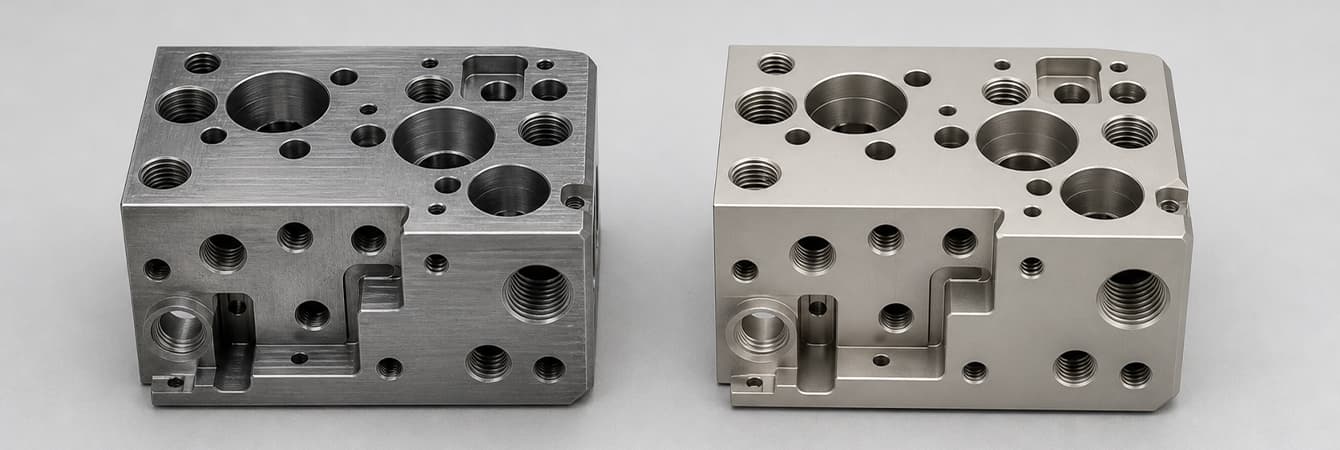
Electroless nickel plating offers a variety of functional specifications and surface finishes, allowing the appropriate coating type to be selected based on product performance requirements.
-
Low-Phosphorus Electroless Nickel (<3% P)
Provides higher hardness and wear resistance, making it suitable for high-precision mechanical components and wear-resistant applications.
-
Medium-Phosphorus Electroless Nickel (5–9% P)
Offers a balanced combination of corrosion resistance and hardness, making it the most common and widely used specification.
-
High-Phosphorus Electroless Nickel (>10% P)
Provides excellent corrosion resistance and non-magnetic properties, making it suitable for harsh environments and electronic equipment.
-
Heat-Treated Reinforced Coating
Post-plating heat treatment significantly increases surface hardness to approximately 900 HV, with actual values depending on coating composition and process conditions.
-
EMI Shielding Coating
Utilizes the coating's electrical conductivity to provide EMI/EMC shielding, making it suitable for AI servers, communication equipment, and electronic components.
-
Matte Nickel Finish
Provides a low-reflective industrial appearance, suitable for equipment exterior parts and functional components.
-
Bright Nickel Finish
Can achieve a higher gloss appearance depending on the substrate surface preparation, making it suitable for products with high aesthetic requirements.
-
Coating Thickness 5–50μm
Can be customized according to corrosion resistance requirements, dimensional tolerances, and functional needs.
Design & Manufacturing Considerations
Electroless nickel plating provides excellent coating uniformity, but various design factors can still affect the final quality. Early evaluation during the manufacturing planning stage is recommended.
Uniform Coating Requirements
Electroless nickel plating can fully cover complex geometries, but the aspect ratio of deep holes and the hanging method should still be verified.
EMI Shielding Requirements
Determine the required nickel coating thickness and conductivity based on shielding frequency and specification requirements.
Corrosion Environment Analysis
Select the appropriate phosphorus content according to the corrosion environment and confirm the applicable testing standards.
Precision Dimensional Control
Since the coating grows uniformly in all directions, appropriate dimensional allowances should be incorporated into the design.
Complex Geometry Plating Capability
Verify the plating feasibility of deep holes, threads, blind holes, and similar features. Adjust part orientation and fixture design when necessary.
Conductive Contact Surface Requirements
Identify the required conductive contact areas and plan masking regions to prevent the coating from affecting electrical performance or assembly requirements.
Industrial Applications
Electroless nickel plating is widely used in high-end industries requiring precision dimensions, superior corrosion resistance, and EMI shielding.
Aluminum components such as enclosures and backplate structures that require EMI shielding and corrosion resistance.
Precision water channel components, including cold plates and piping, require uniform coatings to ensure flow channel accuracy and corrosion resistance.
High-cleanliness precision components such as wafer carriers and chamber parts require uniform coatings that do not contaminate the manufacturing process.
Optical Communication Modules
Precision optical structural components require strict dimensional tolerance control while providing EMI protection.
Lightweight aluminum alloy structural components benefit from electroless nickel plating for enhanced corrosion and wear resistance.
Precision Industrial Equipment
Hydraulic components, precision measuring instruments, and jigs and fixtures requiring highly uniform and precise coatings.